1st Semester / Week 1
(To listen to this study on YouTube, click here)
Many modern American “evangelicals” have sent hundreds of millions of dollars to the Temple Institute in Jerusalem to prepare to rebuild another earthly Temple. Especially if those funds had been taken from families struggling to pay their own bills and struggling for the basic necessities in life, then is that a completely misguided use of their money? Many modern Christians have been taught that God always saves a certain type of people who possess a certain type of DNA (per a modern interpretation of Romans 11:26). They’ve been taught that Jesus isn’t King yet, and that His Kingdom hasn’t yet begun. Some think that only a select few Christians are priests, only a select few Christians are Saints, and that the Church is a building where we gather on a Sunday. Many have been taught an unhealthy and pessimistic worldview, expecting gloom and doom for our planet, believing everything is supposed to be getting worse while they just wait to be raptured away so that the supposedly “7 years of great tribulation” can begin. But is all of that a relatively new, entirely unorthodox, unhealthy, and unBiblical false belief?
We’ll eventually get to that, but for now, let’s first simplify and instead begin to evaluate “how” to study the Bible.
——————
Will any intellectual college professor be able to teach Scripture simply by reading words that are in black and white, and by simply teaching extremely literal meanings of those words? Is Scripture really that simple?
“The natural man does not accept the things that come from the spirit of God. For they are foolishness to him, and he cannot understand them, because they are SPIRITUALLY DISCERNED,” (1 Corinthians 2:14).
Someone who is spiritually immature will only be able to view the Word of God by the simple literal meaning of each word, and will not be able to grasp the deeper, more comprehensive meaning. Yet when someone is filled with the Holy Spirit, they begin to slowly understand the depth of what’s revealed throughout Scripture. (Caution: this does not mean we’re free to use our imagination to create any radically new interpretation; we must instead seek the proper Biblical “BALANCE” rather than falling off into an extreme and incorrect view). We should pray for God to give us discernment when we study His Word, and then like a light bulb that’s suddenly turned on, the Holy Spirit will give you moments when you’re reading Scripture and you suddenly begin to understand and might say something like, “Oh, that’s what that passage is actually talking about.” However, can someone’s “spiritual” interpretation go too far? Absolutely, and history is full of people who, for example, have created radical allegorical commentaries, which is why it’s critical that we pray for discernment so that we can recognize a false message. As a matter of fact, the Bible encourages and empowers us to try and test what we’re taught and to compare everything with the full Scriptures to see if it fits, or if it’s false:
“Beloved, do not believe every spirit, but TEST the spirits to see whether they are from God,” (1 John 4:1).
“Do not be conformed to this world, but be transformed by the renewal of your mind, that by TESTING you may DISCERN what is the will of God,” (Romans 12:2).
“Do not despise prophecies. TEST all things; hold fast what is good,” (1 Thessalonians 5:20-21).
“The Berean Jews were of more noble character than those in Thessalonica, for they received the message with great eagerness and EXAMINED THE SCRIPTURES EVERY DAY TO SEE IF WHAT PAUL SAID WAS TRUE,” (Acts 17:11).
Do we typically only see what’s on the surface when we read the Old Testament? Is it possible that we need to look into deeper meanings in Old Testament passages, rather than only shallow, wooden literalism? It turns out that when the New Testament authors gave us commentaries on Old Testament passages, they revealed deeper spiritual interpretations which never would’ve been grasped by someone who only had the Old Testament. Someone who tries to force simplistically wooden literal fulfillments from those passages would never end up with what the New Testament authors actually reveal regarding the ultimate intended fulfillment of each passage.
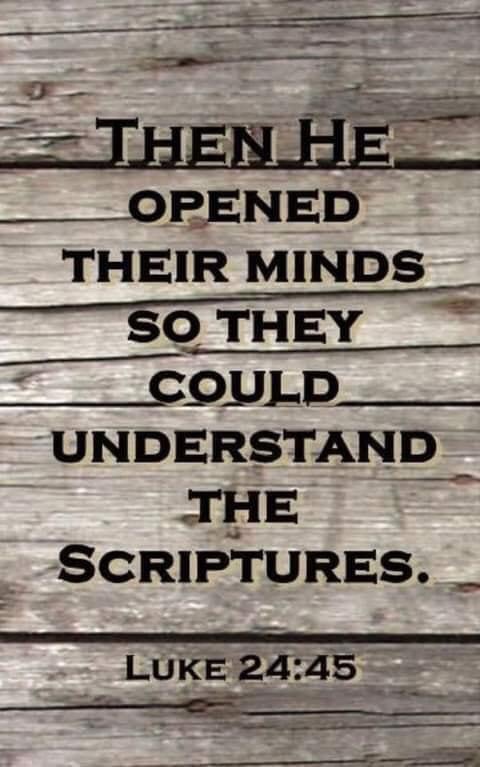
For instance, Orthodox Jews study the Old Testament literally and still await the fulfillment of their expectations, but their religious experts had completely missed Jesus when He came because He didn’t fit their particular literal interpretation of Scripture. Events in the life of Jesus simply didn’t transpire according to their understanding of Scripture. However, when Jesus met the disciples in the upper room after His resurrection, “He opened their minds so they could understand the Scriptures,” (Luke 24:45). That verse clearly demonstrates that even being a Jewish disciple of Christ isn’t enough to cause someone to fully comprehend Scripture, because there are deeper meanings that must be revealed by the Holy Spirit. We as Christians simply must not interpret the Bible the same way as Orthodox Jews because we would miss out on its true meaning.
Observe this from 2 Corinthians 3:13-17:
“the children of Israel could not look steadily at the end of what was passing away. But their minds were blinded. For until this day THE SAME VEIL REMAINS UNLIFTED IN THE READING OF THE OLD TESTAMENT, because THE VEIL IS TAKEN AWAY IN CHRIST. But even to this day, when Moses is read, a veil lies on their heart. Nevertheless WHEN ONE TURNS TO THE LORD, THE VEIL IS TAKEN AWAY. Now THE LORD IS THE SPIRIT.”
“Contrary to a popular hermeneutic [a method of interpretation] which declares, ‘when the plain sense of Scripture makes common sense, seek no other sense,’ the plain sense of Scripture actually often contradicts the true meaning of Scripture and our common sense often makes no heavenly sense. The genre of the text we are reading will indicate how we are to read it: poetry and apocalyptic books cannot be taken literally [or rather, not entirely and extremely literally], and even historical narratives are full of word pictures that must be interpreted rightly to get God’s view of His Scriptures. The Jews of the first century had common sense and they took certain prophecies in the plain sense. This caused them to look for a king like David, a man of war, and miss the true meaning of their own Scripture,” (from Captive to the Word of God, by Stuart Brodgen).
Furthermore, contrary to forcing the “plain interpretation” of Scripture and employing wooden literalism, Scripture actually displays the depth of God’s Word and is such that angels long to comprehend (1 Peter 1:12), the Apostle Peter admits these things are difficult to understand (2 Peter 3:15-16), and potential converts require guidance (Acts 8:30-35). It also requires growth in grace to understand (Hebrews 5:11-14), special teachers to explain (2 Timothy 2:2) and is susceptible to false teachers distorting it (1 Timothy 1:7).
Fortunately, rather than having to only rely on spiritual discernment, the New Testament helps us by providing commentary on the true, ultimate meaning of Old Testament passages. And not only that, but there is a balance to seek by also looking back at the Old Testament to help define symbols which are used in New Testament prophecies. Finding that proper Biblical “BALANCE” will allow us to flourish with God’s consistent, empowering, life changing message.
We see in 1 Corinthians 15:46 that the order of things is first the natural, and then the spiritual. The Old Testament was full of types and shadows, but the reality we should now be able to see is that the fulfillment of all is Jesus Christ, and we should remember His words, “You study the Scriptures diligently because you think that in them you have eternal life. These are the very Scriptures that testify about Me,” (John 5:39). We should always look to see how Scripture points to Jesus, not just in the New Testament, but also in the Old Testament.
Jesus is the fulfillment, and as we’ve just seen, the order leading up to the fulfillment is first the natural (the old inferior types and shadows), followed by the greater ultimate spiritual fulfillment in Jesus, His Holy Spirit and His spiritual Kingdom. Remember, “the Lord is the Spirit” (2 Corinthians 3:17) that takes away the veil that prevents us from truly and fully understanding God’s Word. Does Scripture ever specifically describe the order as being the natural, then spiritual, then reverting back to inferior natural, physical types and shadows in a future Millennium? God can do anything He wants in the future, but so far what He has revealed would encourage us to seek being able to fully comprehend and appreciate our current spiritual Kingdom of King Jesus Christ. The physical natural types and shadows have come and gone, and now Jesus is King and His Kingdom has already been inaugurated. Whether someone wants to recognize and admit this fact or not, Jesus has declared, “ALL AUTHORITY has been given to Me in heaven and on earth,” (Matthew 28:18). Those are the undeniable words of a King… THE KING!!!
The natural, fleshly mind has trouble understanding Scriptures by viewing everything with a shallow, spiritually immature, extremely literal reading, yet Jesus taught His disciples how to see Himself throughout Scripture, and He is who we should be focused on. Hopefully we will all see that Jesus can be found throughout all of Scripture, and He is who we should be looking for. Jesus is who this Bible study is all about.
 “Helping People See Jesus and Exploring All That He Has Fulfilled”
2 thoughts on “Can We See Jesus in Scripture with a Shallow, Wooden, Literal Reading, or Is It Sometimes “Spiritually Discerned?””