5th Semester / Week 6
“YOU also, as living stones, are being built up a spiritual house, a holy PRIESTHOOD, to OFFER UP SPIRITUAL SACRIFICES acceptable to God through Jesus Christ… YOU are a chosen generation, a royal PRIESTHOOD, a holy nation, His own special people, that YOU MAY PROCLAIM THE PRAISES OF HIM who called you out of darkness into His marvelous light; who once were not a people but are now THE PEOPLE OF GOD,” (1 Peter 2:5, 9-10).
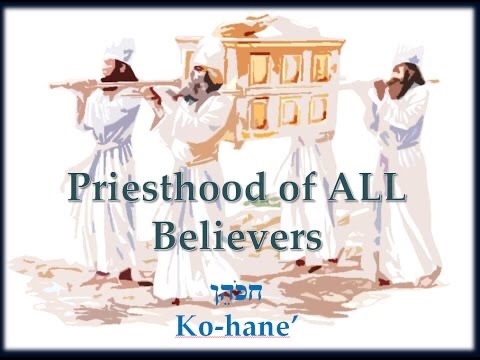
In one of his sermons, the well known and well respected Charles Spurgeon once declared, “I detest the distinction of clergy and laity. I like scriptural priestcraft; for that is the craft or work of the people, who are all priests; but all other priestcraft I abhor.”
Do we realize that we should think of ourselves as empowered priests? The “priesthood of all believers” is an entirely Biblical concept that’s been known since the first century, and was a key component of the Reformation. We’re all together the priesthood of believers, and each and every one of us in Christ is an empowered priest who has a job to do, yet we no longer assist with a offering a sacrificial animal like Old Covenant priests, because the final and perfect lamb has already been sacrificed. Jesus offered the once for all, final atoning sacrifice (Hebrews 10:10,14). There can be no other sacrifice (Hebrews 6:4-6), and any religion that attempts to make further sacrifices is believed to be an abomination to God because it is denying the sufficiency of the ultimate, one-time sacrifice of Christ.
Previously, in the Old Covenant, the priests would offer sacrifices, however:
“For when the priesthood is changed, the law must be changed also,” (Hebrews 7:12).
We can no longer sacrifice animals in the Temple, instead we can only point to what Jesus has fulfilled by being our sacrificial lamb as well as offering ourselves as a living sacrifice:
“Therefore, I urge you, brothers and sisters, in view of God’s mercy, to offer your bodies as a living sacrifice, holy and pleasing to God—this is your true and proper worship,” (Romans 12:1).
Also,
“Through Jesus, therefore, let us continually offer to God a sacrifice of praise—the fruit of lips that openly profess his name. And do not forget to do good and to share with others, for with such sacrifices God is pleased,” (Hebrews 13:15-16).
If we’re no longer able to offer physical, literal sacrifices, then do we know why else we as the priests of the Temple gather as the Church? What’s the primary purpose? According to Acts 2:42 and other passages, the purpose is for edification (building up) through teaching biblical doctrine, fellowshipping with other believers, sharing a meal together (the Lord’s Supper), and for prayer. We also learn in Ephesians:
“He Himself gave some to be apostles, some prophets, some evangelists, and some pastors and teachers, FOR THE EQUIPPING OF THE SAINTS FOR THE WORK OF MINISTRY,” (Ephesians 4:11-12).
To restate, the job of our leaders is to equip us for our work of ministry. (“Scripturally speaking, the ‘saints’ are the body of Christ, Christians, the Church. All Christians are considered saints,” https://www.gotquestions.org/saints-Christian.html). According to this passage, when we gather as saints, we should feel that we’re being equipped by our leaders in order for all of us to become ministers (servants of our Savior and of one another). But do we feel this is what’s currently being done in our modern assemblies?
That passage continues:
“…for the EDIFYING [building up] of the body of Christ [the Church], till WE ALL come to the unity of the faith and of the KNOWLEDGE of the Son of God, to a perfect man, to the measure of the stature of the FULLNESS of Christ; that we should NO LONGER BE CHILDREN, tossed to and fro and carried about with every wind of doctrine…, but, speaking the truth in love, may GROW UP in all things into Him who is the head—Christ— from whom THE WHOLE BODY, joined and knit together by what EVERY JOINT SUPPLIES, according to the effective working by which EVERY PART DOES ITS SHARE, causes growth of the body FOR THE EDIFYING OF ITSELF in love,” (Ephesians 4:12-16).
We now see that Scripture clearly teaches that we gather in order for us all to be equipped and edified (built up), and the original word for “edified” literally means “to erect a house,” and the root word is “oikos,” which means “house,” and this is very fitting since WE are the house of God. Remember 1 Peter 2:5, “YOU also, as living stones, are being built up a spiritual house,” and 1 Corinthians 3:16, “Don’t you know that you are the Temple of God.” We’re to be edified (built up) so that we can fulfill our role as ministers/priests in the house/Temple of God. But does Scripture teach that our main focus is to simply gather to hear a 45 minute monologue from a “professional” while we sit silently and disengaged? We clearly have Christian liberty in how things are done, and that type of format isn’t forbidden, yet a very common theme in Scripture is actually that of “one another.” That phrase “one another” is mentioned 59 times in the New Testament, yet we should also realize that the word “pastor” is only mentioned once in the New Testament. Is that significant? Furthermore, in our modern assemblies, does each believer show up feeling that they truly have the opportunity to contribute something meaningful during the assembly, or, with the way things are currently structured, would there not be any noticeable difference if they only watched on tv or online? What does the Bible have to say about all of this?
A good chapter on how the whole body should function is found in 1 Corinthians 12, and in verse 26 we read:
“How is it then, brethren? Whenever you come together, EACH OF YOU has a psalm, has a teaching, has a tongue, has a revelation, has an interpretation. Let all things be done for edification.”
How often is this able to be done in our modern assemblies? How often do “each of you” get the opportunity to offer a teaching or interpretation in the assembly?
Scripture clearly teaches the role of “one another,” and “each of you” in order for us all to be edified, but again, how many modern assemblies are actually focused on teaching their members how they can become ministers/priests, as well as giving all of them an open opportunity to contribute during the full gathering of the body? Is the moving of the Holy Spirit even allowed, especially when a false teaching has been given, in order to ask the teacher how his message compares with Scripture? (Remember from Acts 17:11 that Scripture encourages us to be like the Bereans who always compared a message with what’s in Scripture).
Jewish assemblies still give their members the opportunity to speak and ask questions, and if that hadn’t been the case, and if things had been like our modern assemblies, then Paul and the disciples in the first century would’ve never had the opportunity to share the Gospel to the Jews when they gathered. Rabbi Jack Abramowitz, JITC Educational Correspondent explains, “Anyone who’s ever learned Talmud knows that the process depends on asking questions and even challenging others’ positions. This is okay because the entire exercise is designed to try and find the truth.” Honestly, what’s more Biblical, the way Jews still function in their assemblies, or our modern monologue format?
Have we been conditioned to be silent sponges that can only absorb from a “professional,” or were we designed to be vessels that pour out the living water of the Holy Spirit? Have we been conditioned to be consumers of religion, or should we be empowered with the knowledge that we’re priests in the New Covenant? One of the many Biblical books dealing with this topic is “The Priesthood of All Believers: Slogan or Substance?” by David Gay, and can be found here.
Rather than ever instructing our preachers to give a “monologue,” there’s a different word that the Bible occasionally used: Strong’s G1256, “dialegomai,” which means “to discuss, to reason, to argue, to speak.” That word describes an interactive form of speech; reasoning through dialogue rather than delivering a one-way address. The Bible quite clearly emphasizes the importance of engaging with the audience and addressing their questions.
For example, let’s look at King James’s version of Acts 20:7:
“And upon the first day of the week, when the disciples came together to break bread, Paul preached unto them, ready to depart on the morrow; and continued his speech until midnight.”
Similarly, some versions unfortunately use the phrase “preaching to them,” which might imply a monologue, however, the actual Greek word used there was “dialegomai,” which is where we get our word for “dialogue.” A back and forth discussion. Other versions accurately use the phrase “talking with them.” How much better would it be to have a lively discussion rather than have to silently listen to an hours long monologue?
Furthermore, studies clearly show that learning is increased when there’s active participation compared to a monologue given by one person. A good book looking into the Scriptural ways that we should function in our assemblies is: “New Testament Church Dynamics” by Stephen Atkerson.
Scripture calls us the body of Christ, and we should be empowered as a healthy, fully functioning body, rather than primarily known as the “professional” few who allow everyone else to passively observe as silent spectators unable to contribute. A body isn’t healthy if it’s a weak, stick figure body supporting a large head. Also, the job of an elder/teacher would be simplified and much easier if others were encouraged to participate (not just by eliminating the need to prepare a perfectly rehearsed, flawless 45 minute monologue, but also by delegating the functions of ministry throughout the week to others).
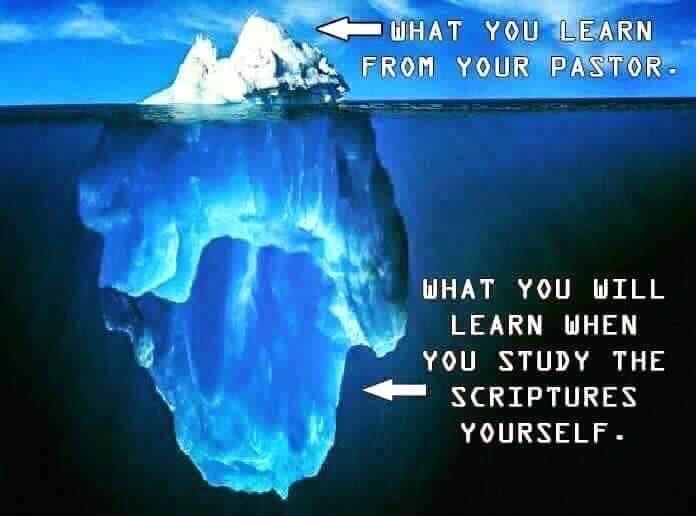
A good question would be how all of this would even be possible in our large assemblies when so many people would need to be given the opportunity to speak. Therefore, how Biblical would it be to primarily gather as smaller, more intimate assemblies meeting wherever there is available space, or simply meeting in homes like the 1st and 2nd century assemblies of believers? This would save a great deal of money that could be spent on real needs within the body, instead of our giving primarily going to “professionals” and the multimillion dollar buildings that are primarily only used once or twice a week and are then virtually empty the rest of the week. These are valuable questions that should be asked.
(For an excellent study on whether the word “church” was ever used in the Bible, or if it’s actually an intentional, harmful mistranslation, see this here)
Jesus has taught us that we are all His sheep (even our leaders are also merely sheep), Jesus is the good shepherd (John 10:11), and as His priests of His New Covenant He now gives equality to every believer with these words:
“Don’t let anyone call you ‘Rabbi,’ for you have only ONE TEACHER, and ALL OF YOU ARE EQUAL as brothers… And don’t let anyone call you ‘Teacher,’ for you have only ONE TEACHER, the Christ. The greatest among you must be a servant. But those who exalt themselves will be humbled, and those who humble themselves will be exalted,” (Matthew 23:8-12).
Again, we’re the sheep of our teacher Jesus Christ, and as His empowered priests, all of us are equal as brothers (and sisters) in Christ.
 “Helping People See Jesus and Exploring All That He Has Fulfilled”