4th Semester / Week 2
How are we able to identify and obey God’s Law? Is the Law given to Moses the ultimate Law that pleases our Father in Heaven? Is there a difference between those who were given that Mosaic Law and those given the New Covenant? Does the work of keeping the Mosaic Law lead to salvation, or is it completely obsolete? In other words, are there 2 different ways of salvation, or is the New Covenant of Jesus the one and only way to have a relationship with the Father?
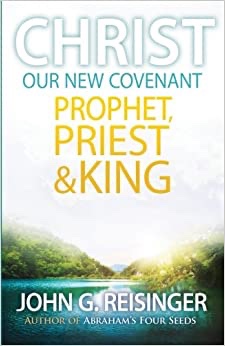
(The following information should begin to provide some answers to these questions, and is from Christ: Our New Covenant Prophet, Priest and King, by John Reisinger):
The covenant at Sinai was a conditional covenant. [National] Israel was indeed a people redeemed by blood, but it was not spiritual redemption by Christ’s blood. It was a physical redemption from Egypt by animal blood. Israel becoming a “kingdom of priests” and a “holy nation” was totally dependent upon their keeping the covenant terms of Exodus 20, which they never did. The covenant at Sinai was without question a legal covenant of works conditioned on Israel’s obedience to that covenant terms. The words “if you will obey” and “then I will” cannot be made to mean “I will whether you do or not.”
This was without question a conditional covenant. Language cannot be more explicit. God said, “If you obey me fully and keep my covenant, then [and only then]… you will be for me a kingdom of priests and a holy nation.” They did become a “holy” (meaning separate) physical nation, but they did not become a “holy” (meaning spiritual) nation where all of the members in the nation were regenerate saints. Failing to see this is one of the tragic mistakes of covenant theologians. They totally fail to see the relationship of the Old and New Covenants. They read a New Covenant meaning of the great redemptive words back into the Old Covenant nation of Israel.
Israel, as a nation, was loved as no other nation, but it was not the same redemptive love with which Christ loved the Church. Israel, as a nation, was sovereignly chosen to be God’s people but that choice, or election, was not the same as the Church being chosen unto everlasting life. Israel, as a nation was called out of bondage to Egypt but that is not the same as the spiritual calling (regeneration) that effectively calls us out of bondage to sin and unites us to Christ. Israel, as a nation, was redeemed by blood, but it was the blood of an animal not the blood of Christ. It was physical redemption, not spiritual redemption.
It is a grievous error to treat the redemptive words “loved, chosen, called and redeemed” the same when applied to Israel as a nation as they are when they are used of the Church. Every single Israelite could say, “God loved me with a special love and sovereignly chose me. He redeemed me with a blood sacrifice and called me out of Egypt.” Every Israelite could say all of those things and still be as lost as the Devil simply because all of those things were physical and applied only to physical Israel. Every member of the body of Christ can say all of those things in the certainty that they are saved and eternally secure in Christ. The one thing every New Covenant believer can add to that list is, “I am justified.” Very few Israelites could add, “I am justified.” Hebrews 3:8-11 and 4:1-2 describe the same people who were “loved, chosen, called and redeemed” in the nation of Israel. [National] Israel was a type of the Church but must never be treated as the true redeemed justified people of God. Not a single person who is “loved, chosen, called and redeemed” in the New Covenant meaning of those words is ever lost. Most of the physical nation of Israel that was “loved, chosen, called and redeemed” was lost. [Romans 9:27 quotes this from Isaiah, “Though the number of the Israelites be like the sand by the sea, only the remnant will be saved,’ ”].
Israel’s nationhood began at Sinai and was based on a covenant of works. Israel never received the blessings promised in that covenant and was disowned as a nation when they crucified their Messiah. The Church, including saved Jews and Gentiles, has received the specific blessings promised in Exodus 19:4-6 (see Peter 2:5-10). The Church is the true holy nation, God’s peculiar possession, and all her members are regenerate priests.
Early dispensationalism also insisted that there were two New Covenants, one for Israel and one for the Church. They believed the New Covenant in Hebrews was made with Israel. If this covenant included Gentiles, it was felt it would weaken premillennialism. Progressive dispensationalism, a recent modification of dispensationalism, insists, on the grounds of Hebrews, that the new covenant was not only made with Israel, but also include the Church. Some dispensationalists, and also some non-dispensationalists, feel that the Progressives are inconsistent and should not call themselves dispensationalists. It is quite clear to me that the New Covenant was not in any sense made with physical Israel; it was made with the Church. It was made with the people for whom Christ died; it was made to replace the Old Covenant; and it was to be remembered by the Church in the gospel age (1 Cor. 11:23-26).
Jewish believers living in the gospel age are a part of the redeemed body of Christ. Christ is their Prophet, Priest and King, just as He is my Prophet, Priest and King. There is not a Prophet, Priest and King for saved Jews and another Prophet, Priest and King for the Church. We simply must understand that when Christ fulfilled the Old Testament promises of the New Covenant, all the distinctions between Jew and Gentile were forever abolished. There was a very clear difference between Jew and Gentile under the Old Covenant, but all of those distinctions are done away in Christ.
How radically different are the terms of the covenant made with Israel at Sinai and the covenant made with Abraham. In the promise to Abraham God said, “I will… I will… I will.” But in the law of Moses God said, “If you will… then I will.” The promise to Abraham sets forth a religion of God: God’s plan, God’s grace, God’s initiative. But the law of Moses sets forth a religion of man: man’s duty, man’s works, and man’s responsibility. The promise to Abraham only had to be believed. But the law of Moses had to be obeyed.
The nature of the Abrahamic covenant and the nature of the Mosaic covenant are indeed radically different, but both covenants serve the same goal and are part of the same story line. Israel’s brash response of assurance that they could keep the terms of the covenant given at Sinai shows how self-righteous they were. They should have said, “Lord, that is a good and fair covenant, and you have every right to demand its terms of perfect obedience. However, you know and we know that we cannot keep those terms, and we will be dead before the sun goes down.” The Mosaic covenant was designed by God to kill all hope of salvation by works and push the sinner to faith in the faith/grace covenant made with Abraham. The Abrahamic covenant was permanent, and the Mosaic covenant was temporary. The law [Mosaic Law] was in force “until the seed of Abraham, the Messiah, came” (Galatians 3:19).
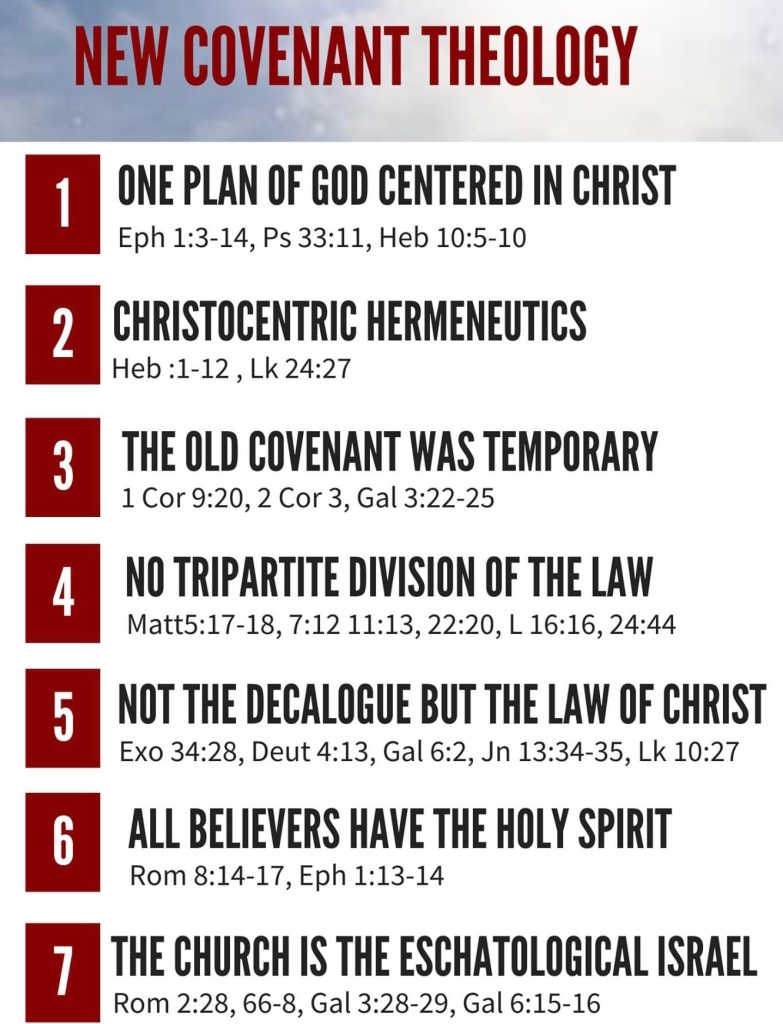
The DISPENSATIONALIST BELIEVES THAT THERE IS A PARENTHESIS IN SCRIPTURE [they believe the Church is a temporary parenthesis which will be removed so that God can put His focus back on the fleshly, physical national Israel]. THEY JUST HAVE THE PARENTHESIS AROUND THE WRONG TIME, WRONG PLACE AND WRONG PEOPLE. THE NATION OF UNBELIEVING ISRAEL IS THE PARENTHESIS– “Long ago, at many times and in many ways, God spoke to our fathers by the prophets,” Hebrews 1:1. In contrast, the nature of the Church is not parenthetical, “but in these last days He has spoken to us by His Son” Hebrews 1:2, and, “This is My beloved Son, with whom I am well pleased; listen to Him” [for He is a prophet superior to Moses and Elijah], Matthew 17:5.
The Old Covenant was based on works and the New Covenant is based on grace. The Old Covenant was deliberately designed to be a “killing covenant.” The stated purpose of that covenant was to convict sinners of their guilt and drive them to the Abrahamic covenant to be justified by faith. The writer of Hebrews reminds us of why the old covenant had to be discarded (Hebrews 8:7-8). The Old Covenant could not meet the sinner’s need. It could not effect justification. None of Aaron’s work could bring the sinner into God’s presence. The writer of Hebrews then quotes Jeremiah 31:31-34 to prove that the change of covenants that was necessary in order for God to accomplish His redemptive purpose was clearly prophesied in the Old Testament Scriptures. This New Covenant that was prophesied was God’s intended purpose ever since eternity began and was made known at the dawn of sin in Genesis 3:15. Israel and the Mosaic covenant were never intended to be permanent. They were announced as ending when Christ came. The nation of Israel and the religion of Judaism upon which it is based, was a parenthesis in God’s one unchanging redemptive purpose of sovereign grace for His one elect people [His remnant].
 “Helping People See Jesus and Exploring All That He Has Fulfilled”