5th Semester / Week 3
The following information is from Eternity Bible college:
“Will Christians worship God in the future (e.g. the millennium) at a physical temple? This has been a debate for many years, especially since 1948 when Israel became a state again. Now, theological camps are divided on the question (shocker, I know). In general, Dispensationalists would say yes, there will be a temple during Christ’s thousand-year reign on earth. This temple will be fully equipped with priest, sacrifices, and all sorts of other old covenant forms of worship. Covenant theologians, however, say no, there will not be a physical temple at any point in the future. We are the temple. The presence of God dwells in the church, not in a physical building. Now, the one thing these two views agree on is that the main passage that speaks about a future temple is Ezekiel 40-48.
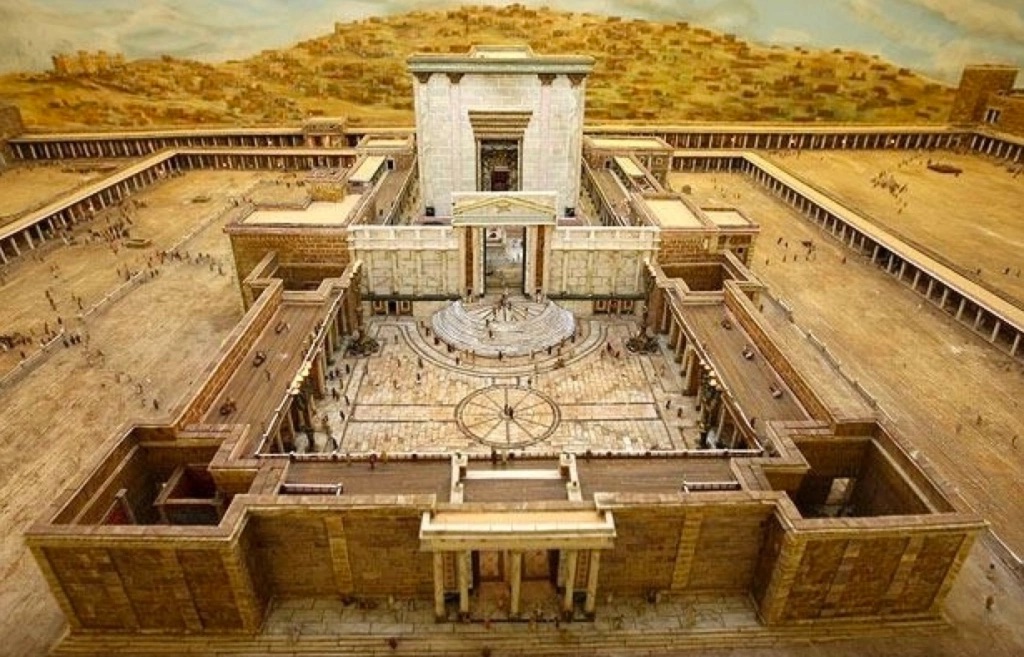
Ezekiel is a wild book. It’s filled with hair-raising visions, offensive language, and sexual images that make translators blush, which is why there is not a single literal English translation of, say, Ezekiel 16 and 23. Then, as if we didn’t have enough to wrestle with, this other-worldly book ends with a prophecy about a future temple (Ezek 40-48, esp. 40-43). In short, Ezekiel has a vision where he follows a “man…with a measuring cord in his hand” (40:2-3), who goes around measuring a temple (chs. 40-42). He then sees the glory of God return to the temple (43:1-5) and the priestly sacrificial system re-instituted (43:13-46:24).
Now, from an old covenant perspective, there’s nothing odd about this. God’s presence dwells in a temple and sin is atoned for by killing animals. But from a new covenant perspective, you should be a bit troubled by the idea of rebuilding the temple and sacrificing animals after Jesus has died as the ultimate sacrifice—a death that tore the curtain of the temple in two.
So how is Ezekiel’s prophecy fulfilled?
Some say that it was fulfilled in 515 B.C. That’s the year that Israel rebuilt the temple after they returned home from exile. The only problem is that the measurements taken in Ezekiel 40-42 don’t match the temple that was built in 515 B.C. Not even close. So Ezekiel is probably looking beyond the temple that existed after exile (this would include Herod’s extreme temple makeover in the first century).
Therefore, Dispensationalists would say that Ezekiel’s prophecy must be literally fulfilled at some future time. And since there’s no temple in the church age, and since there will be no temple in the final state (Rev. 21:22), Ezekiel’s temple must be rebuilt during the thousand year reign of Christ. Now, to be clear, the few verses that mention Christ’s thousand-year reign (Rev. 20:2-7) don’t talk about a temple. And again, when the thousand years are up, there will be no temple (Rev. 21:22). The fulfillment of Ezekiel 40-48, therefore, is more implied than explicitly stated, according to this view.
The strength of the Dispensational view lies in the specific measurements given in Ezekiel 40-42. If Ezekiel had given some general, off-handed prophecy about a future temple, then perhaps he wasn’t thinking of a literal building. But when the angel shows him a temple, he gives him very specific measurements of it. One would assume, therefore, that God intends to fulfill his prophecy (or vision) literally.
Despite the strength of this argument, and despite the fact that I was taught this view in school, and despite the fact that I have many friends and theologians much smarter than I who still hold to this view, I believe it’s incorrect. I believe that there’s much stronger biblical evidence that supports a non-structural fulfillment (I’ll explain later) of Ezekiel’s temple prophecy. But before I explain this, let’s look at one main problem with the Dispensational view.
Ezekiel 43-46 says there’ll be sacrifices that go along with the new temple.
“Yes,” says the Dispensationalist, “but the animal sacrifices at the millennial temple (i.e. Ezekiel’s temple) will not carry atoning value. They will simply be a memorial in which we will remember the sacrifice of Christ.”
Hmmmm…I guess this is a bit better, though I’m still not sure the author of Hebrews would be cool with this. In any case, there’s still a big problem—Ezekiel says that the animal sacrifices will be for atonement, not as a memorial.
“AND ONE SHEEP FROM EVERY FLOCK…TO MAKE ATONEMENT FOR THEM” (45:15)
“HE SHALL PROVIDE THE SIN OFFERINGS, GRAIN OFFERINGS, BURNT OFFERINGS, AND PEACE OFFERINGS, TO MAKE ATONEMENTON ON BEHALF OF THE HOUSE OF ISRAEL” (45:17).
And many other passages agree. So, while I appreciate the desire to see the animal sacrifices as non-atoning, the Dispensational view smuggles a non-literal reading of Ezekiel 40-48 in the back door. They don’t take a literal view of Ezekiel 45:15, 17 and many other passages that speak of atonement.
So I agree and disagree with this view. I agree that God will fulfill Ezekiel’s temple-oriented sacrificial system non-literally. But I disagree that the rest of Ezekiel 40-48 must be interpreted literally. Why would it be? If the New Testament demands a non-literal reading of the sacrificial system in Ezekiel 43-46, then why can’t we also take a non-literal reading of the future temple in Ezekiel 40-42?
[So far we’ve seen that] a literal fulfillment of Ezekiel 40-48 is tough to reconcile with the New Testament. Specifically, even though Ezekiel talks about a future temple, the fact that this temple comes with a sacrificial system that bears atoning value runs roughshod against the New Testament. Christ is our sacrificial atonement, and therefore there’s no reason to sacrifice animals any longer.
But there’s another problem with the literal, or Dispensational, view. And this problem has to do with a biblical theology of temple. Here’s what I mean.
Biblical theology looks at how God’s revelation unfolds, and it studies how various theological themes progress throughout Scripture. Now, the temple is where God’s presence dwells, but God’s presence first dwelt on earth in Eden. But Adam and Eve sinned and were kicked out of God’s presence. They were kicked out of Eden. But God’s desire to dwell with humanity overcomes our sin. And so he makes provisions to dwell with humanity once again. He makes provisions for Israel to build a tabernacle (Exod 25-31, 25-40). After dwelling in the tabernacle for a few hundred years, God moves into a temple—a more permanent, and much more glorious, habitation (1 Kings 5-8). But for hundreds of years Israel lives in sin and breaks the covenant (Jer. 11). So God leaves the temple (Ezek 8-11) and remains distant from Israel.
Eden, Tabernacle, Temple—exile. This is a biblical theology of temple. And it continues.
When Jesus comes on the scene, John says that He “tabernacled among us” (John 1:14). In other words, the presence of God that left the temple returned in Jesus! The full manifestation of God (John 1:17-18)! And Jesus is the temple (John 2:19). He is the physical presence of God on earth. But then Jesus dies, is raised, and ascends to the Father, but this is to our advantage (John 16:17) because He has given us His Spirit. The Spirit of God dwells in the church and we—the church—are therefore “the temple of the living God” (2 Cor 6:16; 1 Cor 3:16; 1 Cor 6:19; Eph 2:21; 1 Pet 2:4-5).
Eden, Tabernacle, Temple—exile—Jesus, Church. The temple theme continues…
When Christ returns and ushers in His new creation—the New Jerusalem—there will be “no temple in the city, for its temple is the Lord God the Almighty and the Lamb” (Rev 21:22). Why have a temple, where God’s presences is walled off from the people, when God can dwell with His people without separation?
Eden, Tabernacle, Temple—exile—Jesus, Church, and New Jerusalem! God desires to dwell with humanity, and He will achieve this goal! This is the storyline of Scripture.
So, what’s the purpose of a literal, structural temple? It’s to enable a holy God to dwell with sinful people. A temple, with its walls, allows the presence of God to dwell with mankind without annihilating them. The temple (or tabernacle) is a necessary way to enable a holy God to dwell with sinful people. There’s still a relationship, but it’s a less intimate one. That’s why Jesus is called both a tabernacle and a temple—the visible presence of God on earth.
Notice that in this “biblical theology of temple” there’s an escalation. It keeps getting better and better as the narrative unfolds—tabernacle, temple, Jesus, and so on. And this is where my critique of the Dispensational view comes in. If a physical temple is a less intimate way for God to dwell with His people, then does it make theological sense for us to rebuild a physical temple in the millennial kingdom? We’ve been on the escalator since we were kicked out of Eden—tabernacle, temple, Jesus, church. Will we go down the escalator in the millennial kingdom to worship God in a physical temple only to get back the escalator again to get to the New Jerusalem? Will Jesus stitch together the temple curtain? Why would we enjoy unmediated access to the throne room through the Spirit (Heb 4), and an even greater access to God in the New Jerusalem (Rev. 21:22), and yet a restricted, walled-off access to God in the millennial kingdom?
Again, the New Testament never says that we will worship God at a temple in the millennial kingdom. Rather, it’s a commitment to a literal reading of Ezekiel 40-48 that gets us there. But perhaps Ezekiel’s temple prophecy—like the sacrificial system—will not be fulfilled literally?
Perhaps God will fulfill His vision to Ezekiel in a much greater, much unexpected way where His presence will dwell with humanity without walls? Perhaps Ezekiel’s temple will be fulfilled in the New Jerusalem?”
[We’ll find out next week]
 “Helping People See Jesus and Exploring All That He Has Fulfilled”
1 thought on “How are we to understand Ezekiel’s vision of the Temple? (part 2)”