5th Semester / Week 4
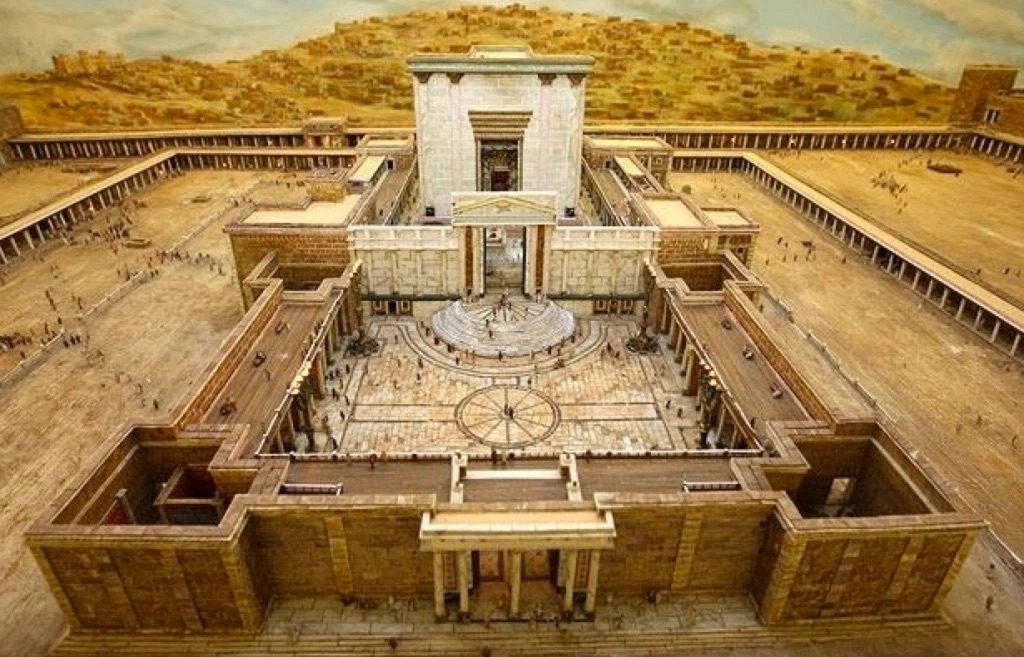
The following information is from Eternity Bible college:
“In the last post, I argued that a literal fulfillment of Ezekiel 40-48 is tough to reconcile with the New Testament. Specifically, even though Ezekiel talks about a future temple, the fact that this temple comes with a sacrificial system that bears atoning value runs roughshod against the New Testament. Christ is our sacrificial atonement, and therefore there’s no reason to sacrifice animals any longer.
But there’s another problem with the literal, or Dispensational, view. And this problem has to do with a biblical theology of temple. Here’s what I mean.
Biblical theology looks at how God’s revelation unfolds, and it studies how various theological themes progress throughout Scripture. Now, the temple is where God’s presence dwells, but God’s presence first dwelt on earth in Eden. But Adam and Eve sinned and were kicked out of God’s presence. They were kicked out of Eden. But God’s desire to dwell with humanity overcomes our sin. And so he makes provisions to dwell with humanity once again. He makes provisions for Israel to build a tabernacle (Exod 25-31, 25-40). After dwelling in the tabernacle for a few hundred years, God moves into a temple—a more permanent, and much more glorious, habitation (1 Kings 5-8). But for hundreds of years Israel lives in sin and breaks the covenant (Jer. 11). So God leaves the temple (Ezek 8-11) and remains distant from Israel.
Eden, Tabernacle, Temple—exile. This is a biblical theology of temple. And it continues.
When Jesus comes on the scene, John says that He “tabernacled among us” (John 1:14). In other words, the presence of God that left the temple returned in Jesus! The full manifestation of God (John 1:17-18)! And Jesus is the temple (John 2:19). He is the physical presence of God on earth. But then Jesus dies, is raised, and ascends to the Father, but this is to our advantage (John 16:17) because He has given us His Spirit. The Spirit of God dwells in the church and we—the church—are therefore “the temple of the living God” (2 Cor 6:16; 1 Cor 3:16; 1 Cor 6:19; Eph 2:21; 1 Pet 2:4-5).
Eden, Tabernacle, Temple—exile—Jesus, Church. The temple theme continues…
When Christ returns and ushers in His new creation—the New Jerusalem—there will be “no temple in the city, for its temple is the Lord God the Almighty and the Lamb” (Rev 21:22). Why have a temple, where God’s presences is walled off from the people, when God can dwell with His people without separation?
Eden, Tabernacle, Temple—exile—Jesus, Church, and New Jerusalem! God desires to dwell with humanity, and He will achieve this goal! This is the storyline of Scripture.
So, what’s the purpose of a literal, structural temple? It’s to enable a holy God to dwell with sinful people. A temple, with its walls, allows the presence of God to dwell with mankind without annihilating them. The temple (or tabernacle) is a necessary way to enable a holy God to dwell with sinful people. There’s still a relationship, but it’s a less intimate one. That’s why Jesus is called both a tabernacle and a temple—the visible presence of God on earth.
Notice that in this “biblical theology of temple” there’s an escalation. It keeps getting better and better as the narrative unfolds—tabernacle, temple, Jesus, and so on. And this is where my critique of the Dispensational view comes in. If a physical temple is a less intimate way for God to dwell with His people, then does it make theological sense for us to rebuild a physical temple in the millennial kingdom? We’ve been on the escalator since we were kicked out of Eden—tabernacle, temple, Jesus, church. Will we go down the escalator in the millennial kingdom to worship God in a physical temple only to get back the escalator again to get to the New Jerusalem? Will Jesus stitch together the temple curtain? Why would we enjoy unmediated access to the throne room through the Spirit (Heb 4), and an even greater access to God in the New Jerusalem (Rev. 21:22), and yet a restricted, walled-off access to God in the millennial kingdom?
Again, the New Testament never says that we will worship God at a temple in the millennial kingdom. Rather, it’s a commitment to a literal reading of Ezekiel 40-48 that gets us there. But perhaps Ezekiel’s temple prophecy—like the sacrificial system—will not be fulfilled literally?
Perhaps God will fulfill His vision to Ezekiel in a much greater, much unexpected way where His presence will dwell with humanity without walls? Perhaps Ezekiel’s temple will be fulfilled in the New Jerusalem?”
[We’ll find out next week]
 “Helping People See Jesus and Exploring All That He Has Fulfilled”
1 thought on “How are we to understand Ezekiel’s vision of the Temple? (part 3)”