
4th Semester / Week 1
We’ve learned that there are many flaws in dispensationalism, but fortunately the answer is yes, there truly was a reason God allowed that system to temporarily gain momentum. Apparently it came into existence in order to assist the search for understanding how to know and obey God’s Law.
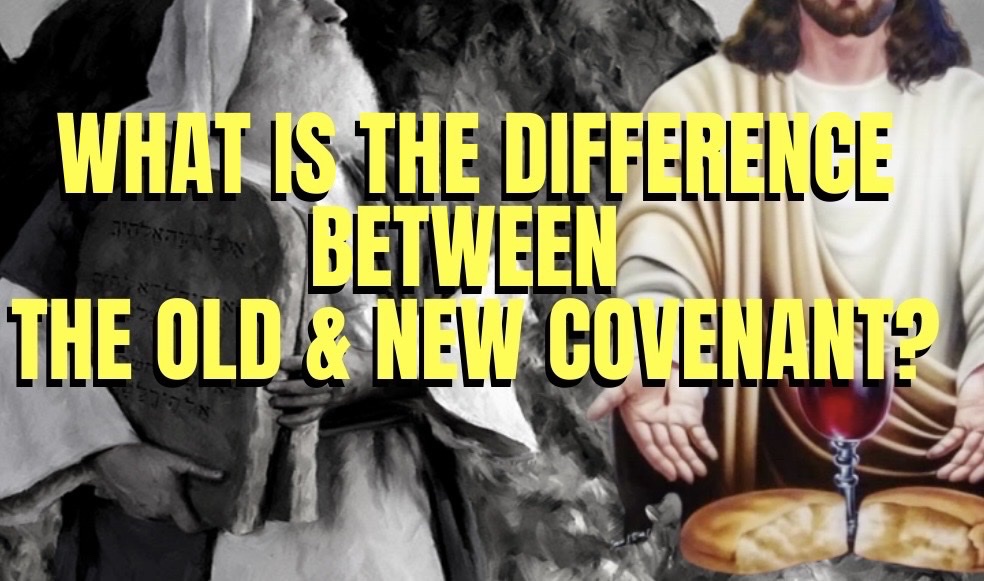
We’ve studied how a pendulum works: when pulled in one direction, it then goes in the opposite direction before being able to eventually rest in the center. In the same way, dispensationalism was the opposite extreme response to the primary Protestant theological system which is known as Covenant Theology (CT). The original system of Covenant Theology (which can also be described as being either an offshoot or the same as Reformed Theology) saw complete continuity between the Church and all of Old Covenant national Israel (rather than only continuity with the remnant and true spiritual Israel of God), therefore it consequently and erroneously believed that Christians are placed back under the Mosaic Law (or more specifically, they think the Mosaic Law can be split into 3 parts: the civil, ceremonial and moral, with the supposedly “moral” part being what we’re placed back under, as if the indivisible Law could somehow be divided up into different parts).
However, the Mosaic Old Covenant is an inseparable Covenant, and if anyone tries to place themself back under any of it, James 2:10 says this, “For whoever shall keep the whole law, and yet stumble in one point, he is guilty of all.” Therefore, if anyone tries to keep “moral” parts of the Mosaic Law but skips the civil and ceremonial parts, then that passage let’s us know that breaking even just one part of it will make you guilty of breaking all of it. Furthermore, the Mosaic Law isn’t easily separated into exclusively “moral” parts because it wasn’t designed to be separated.
We should know that a covenant is a contractual agreement between two parties, and the Bible explicitly describes covenants that God made with Noah, Abraham, Moses, David, and Christ. Those are the actual covenants described in God’s Word. And when Scripture describes an “Old” Covenant, it is explicitly referring to the Law given to Moses, aka, the Mosaic Covenant. We know this because of passages such as Jeremiah 31:31-32, “I will make a new covenant with the house of Israel and with the house of Judah— NOT ACCORDING TO THE COVENANT that I made with their fathers in the day that I took them by the hand TO LEAD THEM OUT OF THE LAND OF EGYPT.” When the Israelites were led out of Egypt they were given the Mosaic Covenant, therefore that is the specific Covenant that has been changed.
The breaking of that Old Covenant had also been predicted in Zechariah 11:10:
“And I took my staff, Beauty, and cut it in two, that I might BREAK THE COVENANT which I had made…”
That Mosaic Covenant was “the ministry of death” and “condemnation” (2 Corinthians 3) designed to magnify sin, and was a works based agreement rather than a covenant of grace. According to Scripture, Christians shouldn’t be trying to meticulously fulfill the terms of the now “obsolete” Mosaic Old Covenant which was given to a mostly unregenerate people. Instead, we can simply look back at the Mosaic Covenant and know that studying the terms of that agreement is good for our edification and it reveals aspects of God’s character. Fortunately, we’re now a spiritually regenerated body of believers and our current Covenant that the Holy Spirit teaches us is a much higher standard than what was given to the physical nation of mostly unregenerate fleshly Israel.
The problem with Covenant Theology was their creation of what they’ve termed a “Covenant of Grace” and a “Covenant of Works” to which they assign great theological significance. We should again note that the only covenants mentioned in Scripture are the ones made with Noah, Abraham, Moses, David, and Christ, therefore it seems possibly misleading to make up other covenants that aren’t explicitly described in Scripture. The originators of Covenant Theology had assigned so much significance to their additional covenants that their councils even killed those who disagreed with them (see the Anabaptist Felix Manz as an example, also here for more information). Ulrich Zwingli’s major contribution to Covenant Theology was his emphasis on the unity of the Old and New Testaments through his understanding of an overarching “Covenant of Grace.” Zwingli believed in the continuity of that supposed “Covenant of Grace” from the Old Testament to the New, therefore baptism supposedly now replaces circumcision as the sign of being in that covenant (even though that’s never found in Scripture and is refuted here). This then led to his extreme conviction in infant baptism to the point that when Felix Manz pointed out that rather than needing to baptize completely aware infants, true baptism is simply when someone can consciously decide on their own to be baptized as a sign of their salvation, Zwingli then used the Zurich city council in 1527 to kill Manz by drowning. The very water that should’ve been used to bring new life through baptism was used to kill Manz, which proved that some of the originators of Covenant Theology had completely missed the point of our Christian faith (even John Calvin used the Geneva council to enforce the death penalty on someone he viewed as being a heretic). For another less severe example, in 1664 Benjamin Keach was fined and sentenced to stand in the pillory for simply teaching believers baptism rather than baptizing infants.
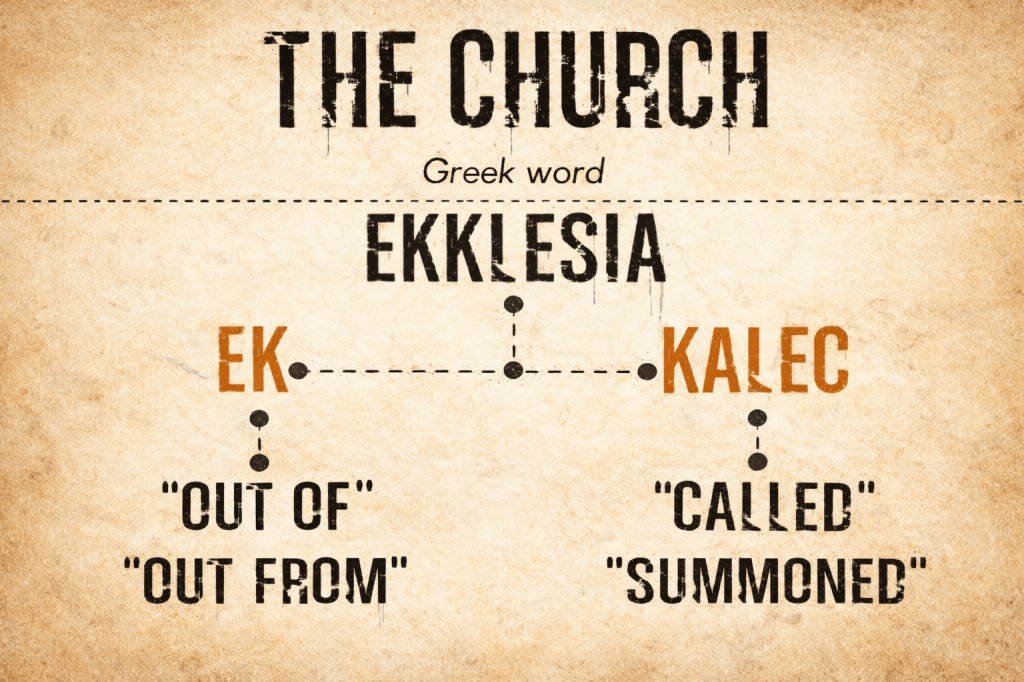
Because the physical nation of Israel was made up of believers and unbelievers (or they could be called elect and non-elect, or regenerate and unregenerate), Covenant Theology incorrectly saw complete continuity of the Church and national mostly unregenerate Israel, therefore it thought the Church is also made up of believers and unbelievers. However, we should be able to see that the True Church, the Ekklesia (“the called out ones”), the True Israel of God is exclusively the Elect, the Remnant, those who are permanently indwelled with God’s Holy Spirit through the transformation of regeneration (which is new life through being “born again” with the Holy Spirit). Each and every true member of the Church has been “called out,” will be saved, and through their new birth with the Holy Spirit have already enter into our present day spiritual Kingdom of King Jesus (keep in mind that the final “consummated” form of the Kingdom hasn’t yet arrived). There are no unbelievers in the Body of Christ, instead, all are filled and regenerated with the Holy Spirit. Since the true Church is only made up of redeemed believers, in this particular way it is unlike the fleshly physical nation of mostly unregenerate Israel, therefore it is unlike the Old Covenant.

Since the New Covenant is only made with regenerated elect believers, logically there are no unbelievers who are given the New Covenant. The reason why Covenant Theology had tried to imply the New Covenant might be given to unbelievers was because they sought to baptize infants, thinking they can be brought into the Covenant with God just like unbelievers in national Israel who had access to the Old Covenant through physical circumcision (but even physical circumcision was only merely a type and shadow of the intended true spiritual circumcision of the heart). This is where the New Covenant is different from and greater and than the Old. The Old Covenant was powerless and unable to save, while the New Covenant is a powerful saving and regenerating Covenant, and this is “Good News.” However, trying to imply that the New Covenant is also given to any baptized infants whom at that point are unregenerate, many of which will end up not being saved, minimizes the true saving power of the New Covenant, and that’s a huge flaw of Covenant Theology.

In continuing to evaluate continuity versus discontinuity, we’ve seen that Dispensationalism went too far in the other direction and erroneously saw complete discontinuity between the Church and Israel, yet they accurately saw that there has been a change in the Covenants. But just like with a pendulum, the comprehensive Truth to all of these issues is often somewhere in the middle, which is where you will find the system known as New Covenant Theology (NCT). Because of the work done by dispensationalism, we can now appreciate the newness of the New Covenant. At first glance, the system of NCT might appear to be new, but NCT actually has its roots in the 1644 1st London Baptist Confession of Faith, as well as being a solidly Biblical Theology rather than clinging to some of the manmade presuppositions of systematic Theologies. “New Covenant Theology is a relatively new label, but it is not a new method of interpretation. The early Church fathers and the Anabaptists were ‘putting the Bible together’ in a similar way,” (New Covenant Ethics by Blake White, pg. 34).
Furthermore, New Covenant Theology isn’t a “new” version of Covenant Theology, but rather, it sees that the “telos” (the end purpose or goal) is our Christocentric “New Covenant” that Jesus Christ has already established. The “New Covenant” is our current “agreement” with our Creator, and therefore should be our primary focus. When someone examines New Covenant Theology they will find that it’s the most Christ-centered Biblical theology.


The definition of NCT is a theological system which stresses that Jesus Christ is the nexus & climax of God’s plan in redemptive history, that the New Testament Scriptures have interpretive priority over the Old Testament Scriptures, and that the New Covenant truly is a new arrangement between God and man; this system also strives to maintain the biblical tension of continuity and discontinuity found in Scripture.
Now that we’ve identified the significance of examining continuity versus discontinuity, this semester we’ll continue to look more into what Scripture tells us about the Covenants, and specifically what it now tells us about the Mosaic Law. But for just a glimpse, our general relationship toward the Law of Moses is that we are not under its authority (Hebrews 7:12, Hebrews 8, Romans 6:14, 7:6, 8:3-4, 2 Corinthians 3, Ephesians 2:15, Galatians 5:18, etc). The “Old” Law was given to Moses, while Jesus is the “New” Law-giver rather than merely being an interpreter of the Mosaic Law. In the New Covenant, we now have the Law of Christ, which is the culmination of all that He taught as well as the continual work of the Holy Spirit in us, and all of this is a higher standard than what was given to Moses.
Thinking that Christians don’t have any connection to the name “Israel” is THE false manmade presupposition of dispensationalism, while thinking that the Church is made of redeemed and unredeemed people who are placed back under the specific terms given to Moses in the Old Covenant is THE false manmade presupposition of Covenant Theology.
Dispensationalists have often been falsely accused by those holding to Covenant Theology of being antinomian (against the Law) simply for pointing out what Scripture itself says about the Mosaic Old Covenant, and this is where NCT shares somewhat of a common ground with dispensationalism. Furthermore, even though we’ve seen specific ways the dispensational system hurts and weakens the Church, anecdotal evidence seems to suggest that these assemblies are viewed more favorably than assemblies which hold to Covenant Theology. Those that hold to Covenant Theology are sometimes described as being less open and inviting, and instead seem to be more judgmental. Could this be because of their misunderstanding of God’s Law? Hopefully in continuing to learn about what Scripture tells us about God’s Law we’ll learn to be more like Christ.
We’re going to be exploring some of the common ground shared with dispensationalism, but for now we’ll close with this Good News from Hebrews 8:6, “now He [Jesus] has obtained a more excellent ministry, inasmuch as He is also Mediator of a BETTER COVENANT, which was established on BETTER PROMISES.”
 “Helping People See Jesus and Exploring All That He Has Fulfilled”